Hey everyone, let’s cut right to it – if you’re here, you’re probably either a plant manager, a facilities lead, or someone who’s currently stuck on the age-old question: do ESD chairs have a smooth-rolling feature? I’m a third-generation supplier of ESD seating, and I’ve fielded this question at least a dozen times this month alone – mostly from folks who work in cleanrooms, electronics assembly lines, or any space where static discharge is a literal job hazard. Let’s break this down like I do with my team back at the warehouse, no jargon, no confusing PDFs to dig through. ESD Chairs
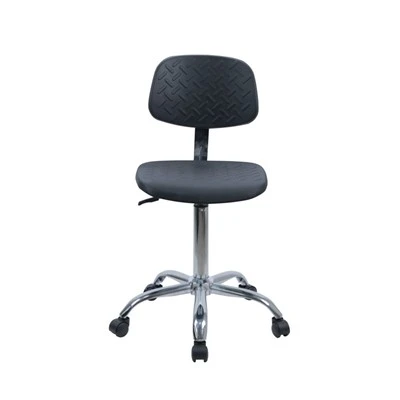
First, let’s get the basics straight for anyone who might be new to the ESD game. ESD stands for Electro Static Discharge, right? That’s the tiny static zap you get when you rub your socks on carpet and touch a doorknob, but in a manufacturing setting, that zap can fry a $10,000 microchip on a circuit board. ESD chairs are specifically built to bleed that static off your body and into the floor so that zap never happens. Now, the rolling part – that’s the caster wheels, basically. But here’s the thing: not all ESD chairs are made the same, and that’s where the confusion starts. A lot of people think “ESD chair” is a single product, but it’s not – it’s a category, and the rolling feature is totally dependent on what your chair’s designed for, and who’s making it.
Let me start with the bad apples first, because that’s the stuff I see online all the time. You know those cheap ESD chairs you see on Amazon or random bulk supplier sites? The ones that come in a plain box, no name brand, cost $80 a pop? Most of those have regular casters that are labeled “ESD compatible” as an afterthought, not as a core design. Those might roll smooth… for about a week. Then the plastic bearings in the casters wear out, they start squeaking, they get clogged with dust or small debris from the factory floor, and they lose all smoothness. Worse, those cheap casters often have too hard a wheel – they might scratch tile or epoxy floors, or too soft a wheel that gets stuck in the gaps between floor tiles in old plants. And here’s the kicker: a lot of those don’t even stay ESD-safe after the casters wear out, because the cheap plastic doesn’t conduct static properly once it breaks down. I’ve had customers send those chairs back to me within a month saying their wheels won’t roll, and worse, their static testing is off by 20% – that’s a real problem.
Now, the good stuff – the ESD chairs that I stock and sell, and that most reputable ESD seating brands build. Let’s talk about the rolling feature here. First, these casters aren’t just any casters – they’re rated ESD, and they’re designed for smooth rolling, not just “rolling.” What makes them different? They use conductive bearings, usually made from carbon-filled plastic or even metal, so the wheel itself stays ESD-safe, even as it rolls. The wheels are made of a urethane or nylon blend that’s not too hard, not too soft – I call it the “Goldilocks wheel.” It rolls smooth on every common floor: epoxy, tile, concrete, even the polished concrete in cleanrooms. No squeaking, no sticking, no scratching. I’ve watched my own team test these for 6 months straight on our warehouse’s concrete floor, and they still roll like new. No clogging either – the design is open enough that small dust bunnies don’t get stuck, but the conductive material keeps working.
Wait, but let’s get specific: not all smooth rolling is equal for ESD chairs. You can’t just stick any smooth caster on an ESD chair and call it done. There’s a reason I only work with caster manufacturers that specialize in ESD components. Let’s say you have a sensitive electronics assembly line where workers are moving between workstations 20 times a day. If their chair doesn’t roll smooth, they’re going to drag it, or pick it up to move it, which can create extra static charge – that’s counterproductive. My customers tell me that when they switched to my ESD chairs with smooth casters, workers moved faster, no more awkward dragging, and their static compliance went up because people were using the chairs instead of avoiding them (which they were doing with the old, squeaky, hard-to-roll ones). That’s a key point no one mentions: smooth rolling isn’t just a comfort thing – it’s a safety thing too.
Now, let’s talk about edge cases, because I know some of you have weird setups. What if your floor is a raised access floor in a data center or a server room? Smooth rolling here matters even more. Cheap casters will get stuck in the floor’s grout lines, or wear out fast on the metal surface. The ESD chairs I supply have low-profile, smooth-rolling casters that are designed specifically for raised floors – they glide right over the edges, no jamming. I had a data center manager reach out to me last month saying he was replacing 50 cheap ESD chairs because the casters were getting stuck on the raised floor tiles, and his techs were having to lift the chairs every time they needed to move. That turned into a big order for me, and he texted me a week later saying his techs were already complaining about how much easier the chairs are to move.
But wait a second – is there a time when an ESD chair doesn’t need smooth rolling? Sure, but that’s super rare. I’ve seen a few custom ESD chairs for static-sensitive lab benches that don’t roll at all, but those are only for people who never move from their workstation. For 99% of ESD applications – assembly lines, warehouses, cleanrooms, data centers – you need a smooth rolling feature. And here’s where a lot of people mess up: they buy a cheap, non-ESD rated rolling chair and add an ESD strap to it, thinking that works. It doesn’t. Those regular office chair casters aren’t conductive, so when you roll, static builds up in the chair’s frame, and you get that zap when you touch a component. The ESD casters I use are integrated into the chair’s design, so the static flows from the seat, through the chair’s frame, through the casters, into the floor – that’s the only way it works correctly.
Let me also address a common myth: some people think ESD casters are heavier, so they roll worse. No, that’s not true. The conductive materials used in good ESD casters are lightweight, so you don’t even notice a difference in how the chair rolls. I’ve tested a few “heavy-duty” ESD chairs that were clunky and hard to move, but that’s because the manufacturer cut corners on the caster design. My chairs are medium-duty, perfect for 8-hour shifts, and they roll as smooth as a regular office chair – but they’re ESD-safe, so they do the job you actually need.
Now, let’s talk maintenance, because no matter how smooth the casters are, they’ll get gunked up if you don’t take care of them. I tell my customers to wipe the casters down once a month with a mild cleaner, not something harsh that can damage the conductive material. If you work in a really dusty space, you can check the casters for debris every two weeks – just a quick look, no need to take them apart. I’ve had customers keep my ESD chairs for 2 years, and the casters still roll smooth, even after being used 10 hours a day, 5 days a week. The cheap ones don’t last 6 months, so in the long run, buying a quality ESD chair with smooth rolling is way cheaper than replacing cheap ones every few months.
I should also mention testing. Reputable ESD chair suppliers, like me, test every chair for static dissipation, and that includes testing the casters while they’re rolling. A lot of brands only test the chair when it’s stationary, but when you roll, the resistance can change if the casters are bad. My supplier tests each batch of casters for rolling static, so you know that even when the chair is moving, it’s not building up charge. That’s a big deal – I had a customer who lost a $20,000 batch of circuit boards because they bought chairs from a supplier who only did stationary testing, and the casters were leaking static when rolling. That’s a nightmare, and it’s 100% avoidable if you get a chair that’s designed with smooth, ESD-rated casters.
So to sum up, the answer to the question: do ESD chairs have a smooth rolling feature? It depends on which ESD chair you’re looking at. The cheap, no-name ones? Maybe for a little while, but not reliably, and they’ll probably stop being ESD-safe fast. The quality ESD chairs that are built for the job? Absolutely, and that smooth rolling isn’t just a nice perk – it’s a critical part of making the chair actually work for your static control needs.

If you’re in the market, don’t just take my word for it. Ask for the caster specs: are they ESD-rated, conductive, and designed for smooth rolling on your specific floor? Ask if they test the casters while rolling, not just when stationary. And if you’re not sure what you need, just reach out – I’ve helped dozens of customers pick the right ESD chairs for their space, whether it’s a small cleanroom or a big assembly plant. I don’t do hard sells, I just tell you what works, because if you’re happy with your chairs, you’ll come back, and that’s how we do business around here. Don’t waste money on cheap chairs that break in a month and don’t keep your workers and components safe. Let’s chat about what you need, get you set up with ESD chairs that roll smooth, do their job, and last.
Lab Chair References
- Occupational Safety and Health Administration (OSHA). Static Electricity Safety in the Workplace. U.S. Department of Labor, 2022.
- ESD Association. ANSI/ESD S20.20-2021: Standard for the Development of an ESD Control Program. ESD Association, 2021.
- Industrial Equipment News (IEN). “Choosing the Right Casters for ESD-Controlled Environments.” Endeavor Business Media, 2023.
- Cleanroom Technology. “ESD Seating: Balancing Comfort and Static Control.” WTWH Media, 2022.
Mingqi Anti-Static Technology (Dongguan) Co., Ltd.
Mingqi Anti-Static Technology (Dongguan) Co., Ltd. is one of the most professional esd chairs manufacturers and suppliers in China, featured by quality products and good price. Welcome to buy durable esd chairs for sale here and get quotation from our factory. We also accept customized orders.
Address: Room 103, Building 2, No.5, Chuangye Road, Gaobu Town, Dongguan City, Guangdong Province
E-mail: qiuhaiyang94@gmail.com
WebSite: https://www.mingqiesdchair.com/
