As a supplier of Five – axis Machining Centers, I’ve witnessed firsthand the critical role vibration control plays in the performance and precision of these advanced machines. In this blog, I’ll delve into the various vibration control methods for a Five – axis Machining Center, sharing insights based on our years of experience in the industry. Five-axis Machining Center

Understanding the Impact of Vibration in Five – axis Machining Centers
Before we explore the control methods, it’s essential to understand why vibration is such a concern in Five – axis Machining Centers. Vibration can have a detrimental effect on the machining process. It can lead to poor surface finish, reduced tool life, and decreased dimensional accuracy of the machined parts. In a Five – axis Machining Center, which is designed for high – precision and complex machining operations, even the slightest vibration can cause significant issues.
Vibration in a Five – axis Machining Center can originate from multiple sources. One of the primary sources is the cutting process itself. When the cutting tool engages with the workpiece, it generates forces that can cause the machine to vibrate. The dynamic nature of the Five – axis movement, with its multiple axes of rotation and translation, also adds to the complexity of vibration generation. Additionally, external factors such as the floor on which the machine is placed, nearby machinery, and environmental conditions can contribute to vibration.
Passive Vibration Control Methods
Isolation Mounts
Isolation mounts are one of the most common passive vibration control methods used in Five – axis Machining Centers. These mounts are designed to isolate the machine from the floor and reduce the transmission of vibration. They work by absorbing and dissipating the energy generated by the machine’s operation.
There are different types of isolation mounts available, including rubber mounts, spring mounts, and air mounts. Rubber mounts are relatively inexpensive and provide good damping characteristics. They are suitable for applications where the vibration levels are not extremely high. Spring mounts, on the other hand, offer higher stiffness and can handle larger loads. They are often used in heavier Five – axis Machining Centers. Air mounts are the most advanced type of isolation mounts. They use compressed air to provide a high degree of isolation and can be adjusted to suit different operating conditions.
Damping Materials
Damping materials are another effective passive vibration control method. These materials are used to absorb and dissipate the energy of vibration. They can be applied to various parts of the machine, such as the machine bed, columns, and tool holders.
One common type of damping material is viscoelastic polymers. These polymers have the ability to convert mechanical energy into heat energy, thereby reducing vibration. They can be applied as coatings or inserts in the machine components. Another type of damping material is composite materials, which are made up of a combination of different materials with high damping properties. These materials can be used to replace traditional metal components in the machine, providing better vibration control.
Active Vibration Control Methods
Feedback Control Systems
Active vibration control systems use sensors to detect vibration and actuators to counteract it. In a Five – axis Machining Center, feedback control systems can be used to monitor the vibration levels in real – time and adjust the machine’s operation accordingly.
The sensors used in these systems can measure various parameters such as acceleration, displacement, and velocity. The data collected by the sensors is then sent to a controller, which analyzes the data and determines the appropriate action. The actuators, which can be in the form of piezoelectric actuators or electromagnetic actuators, are used to apply forces to the machine to cancel out the vibration.
For example, if the sensors detect vibration in the X – axis of the Five – axis Machining Center, the controller can send a signal to the actuator to apply a force in the opposite direction to reduce the vibration. This real – time adjustment helps to maintain the stability and precision of the machining process.
Adaptive Control
Adaptive control is an advanced form of active vibration control. It allows the machine to adapt to changing operating conditions and vibration levels. In a Five – axis Machining Center, adaptive control systems can adjust the cutting parameters, such as feed rate and spindle speed, based on the detected vibration.
The adaptive control system continuously monitors the machining process and uses algorithms to optimize the cutting parameters. For instance, if the vibration levels increase during a particular machining operation, the system can automatically reduce the feed rate to minimize the vibration. This not only improves the quality of the machined parts but also extends the tool life.
Structural Design for Vibration Control
Rigid Frame Design
The structural design of the Five – axis Machining Center plays a crucial role in vibration control. A rigid frame design can help to reduce the vibration levels by providing a stable platform for the machine’s operation.
The frame of the machine should be made of high – strength materials and have a well – designed geometry. For example, using a box – type structure for the machine bed can increase its stiffness and reduce the tendency to vibrate. Additionally, the joints between the different components of the machine should be designed to be rigid and provide good load – transfer characteristics.
Dynamic Balancing
Dynamic balancing is an important aspect of the structural design of a Five – axis Machining Center. It involves balancing the rotating components of the machine, such as the spindle and the tool holder, to minimize the vibration caused by unbalance.
Unbalanced rotating components can generate centrifugal forces, which can lead to vibration. By ensuring that the rotating components are properly balanced, the vibration levels can be significantly reduced. This can be achieved through various methods, such as adding counterweights or using precision machining techniques to improve the balance of the components.
Tooling and Cutting Strategies for Vibration Control
Tool Selection
The choice of cutting tools can have a significant impact on vibration control in a Five – axis Machining Center. Tools with high – quality coatings and sharp cutting edges can reduce the cutting forces and, consequently, the vibration levels.
For example, carbide tools are often preferred in Five – axis machining due to their high hardness and wear resistance. They can provide a smoother cutting process and reduce the likelihood of vibration. Additionally, the geometry of the tool, such as the rake angle and the clearance angle, can also affect the cutting forces and vibration.
Cutting Strategies
The cutting strategies used in a Five – axis Machining Center can also help to control vibration. For instance, using a trochoidal milling strategy can reduce the cutting forces and vibration compared to traditional milling strategies. Trochoidal milling involves using a circular or helical path to cut the material, which distributes the cutting forces more evenly.
Another effective cutting strategy is to use a high – speed machining approach. High – speed machining can reduce the cutting forces and the time of contact between the tool and the workpiece, thereby minimizing the vibration. However, it requires careful selection of the cutting parameters and the tool to ensure optimal performance.
Conclusion
Vibration control is a critical aspect of the operation of a Five – axis Machining Center. By implementing a combination of passive and active vibration control methods, optimizing the structural design, and using appropriate tooling and cutting strategies, we can significantly reduce the vibration levels and improve the performance and precision of the machine.
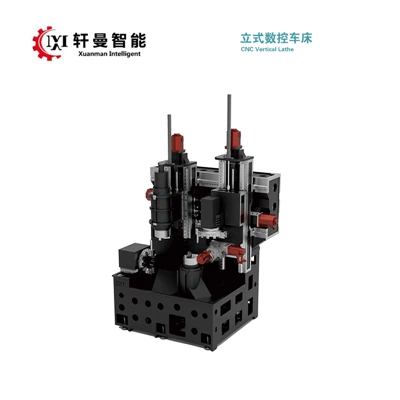
As a supplier of Five – axis Machining Centers, we are committed to providing our customers with machines that are equipped with the latest vibration control technologies. We understand the importance of vibration control in achieving high – quality machining results, and we are constantly researching and developing new methods to further improve the performance of our machines.
Face Grinding Machine If you are interested in learning more about our Five – axis Machining Centers and how we can help you with vibration control, we invite you to contact us for a procurement discussion. Our team of experts is ready to assist you in finding the right solution for your machining needs.
References
- Altintas, Y. (2000). Manufacturing Automation: Metal Cutting Mechanics, Machine Tool Vibrations, and CNC Design. Cambridge University Press.
- Smith, J. C. (2015). Vibration Control in Machine Tools. Springer.
- Tobias, S. A. (1965). Machine Tool Vibration. Blackie & Son Limited.
Jiangsu Xuanman Intelligent Equipment Co., Ltd.
We’re well-known as one of the leading five-axis machining center manufacturers in China, featured by quality products and low price. Please rest assured to buy discount five-axis machining center made in China here from our factory. We also accept customized orders.
Address: No. 1-1, Weier Road, Jieji Equipment Manufacturing Industrial Park, Sihong County, Suqian City, Jiangsu Province, China
E-mail: jsxmzn@163.com
WebSite: https://www.xm-cnc.com/
