If you’ve ever spent time around small-scale farming, livestock rearing, or even home gardening for animal feed, you’ve probably used a chaff cutter—whether a hand-cranked, electric, or diesel-powered model. But here’s the thing that most people, even some first-time buyers, overlook: cutting stability isn’t just a “nice to have” feature—it’s the difference between a smooth, efficient feed prep job and a frustrating, messy headache. As a supplier of chaff cutters, I get tons of questions about this, so let’s break it down like I’m explaining it to a buddy who’s never used one before, no fancy jargon, just real talk. Chaff Cutter
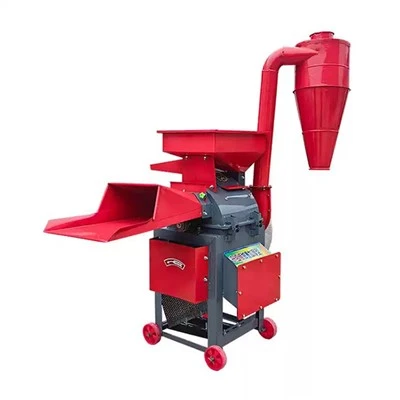
First, let’s define what cutting stability actually means, because I’ve seen way too many sellers throw the term around without explaining it. Cutting stability for a chaff cutter is how consistently the machine chops stalks, hay, straw, or whatever feed you’re running through it into uniform lengths, without jamming, spitting uneven chunks, or veering off (literally, sometimes—old hand-cranked ones will lurch if they’re wobbly). It’s not just about the blade sharpness, either—though that’s a big part. It’s how the whole machine holds together mid-cut, how the feed is fed into the cutting chamber evenly, and how the blades interact with the rotating head or shear bar without skipping a beat.
Let’s start with the big, obvious factor: machine build quality. I’ve had customers come to me saying their $50 budget hand-cranked chaff cutter works fine for small batches of hay, but when they tried a full bale of straw, it jammed so hard they broke the crank. Why? Because those cheap models are made from thin, flimsy metal that twists when you apply pressure. A stable chaff cutter needs a heavy-duty frame, usually cast iron or thick steel, that doesn’t flex when the blades are spinning fast. For electric models, that’s even more important—if the motor’s powerful enough but the frame bends, the blade alignment gets off, and suddenly you’re chopping 2-inch and 6-inch pieces all in the same pile, or worse, the blade hits the side of the chamber and dulls instantly.
Then there’s the blade system, which is the heart of cutting stability. I don’t just mean “sharp blades”—I mean how those blades are mounted and paired with the shear bar (that fixed metal piece right behind the blades where the feed gets sheared). A lot of lower-end cutters have loose blades that wiggle when the machine runs. Even a tiny amount of blade play will make the cut length inconsistent. Stable cutters use precision-mounted blades, usually secured with tight bolts or set screws that don’t come loose with vibration. Also, the shear bar has to be perfectly aligned with the blades—if it’s off by even a millimeter, the blades won’t meet the bar evenly, so you get crushing instead of clean chopping, which leads to jams.
Feed handling is another huge part that people sleep on. You can have the sturdiest frame and sharpest blades, but if the feed isn’t fed evenly into the chamber, stability goes out the window. A lot of budget cutters have a loose feed chute that lets big clumps of hay drop in all at once, which overloads the blades and makes them stall. Good, stable chaff cutters have a controlled feed mechanism—either a roller system that pulls feed in at a steady pace, or a clear chute with guides that prevent clumps. I once had a customer with a mid-range cutter who was getting uneven cuts until he realized he was shoving handfuls of straw in at a time. Once he slowed down and used the rollers, the cuts were uniform, and the machine didn’t jam once. That’s how feed handling ties directly to cutting stability.
Now, let’s talk about what instability actually costs you, because it’s not just an annoyance. If your chaff cutter is unstable, you’re wasting feed—uneven chunks mean some pieces are too big for your livestock to eat, so they trample it, or it doesn’t digest well. Jams slow you down so much that prepping a day’s feed takes twice as long, which is a big deal when you have 10 cows or 50 goats to feed. And worn-out blades from misalignment? That’s extra money you didn’t budget for. I’ve seen a customer go through three sets of blades in six months with an unstable cutter, when a stable one would have lasted a year or more.
Wait, but it’s not just industrial or large-scale setups—even small, home use matters. I have a friend who raises 2 sheep and uses a portable electric chaff cutter. She was complaining for months that it never cuts evenly, until she asked me to take a look. The machine was sitting on wobbly plastic legs, so when it ran, it bounced back and forth. I gave her a set of rubber anti-vibration pads to put under the legs, and suddenly the cuts were uniform, no more jams. That’s a tiny fix that fixed a lot of the stability issues—people forget that proper setup (not just the machine itself) affects stability too.
Let’s also clear up a common myth: diesel-powered cutters are always more stable than electric ones. Nah, not if the diesel model has a flimsy frame. I’ve had customers who switched from a budget electric cutter (which kept jamming) to a diesel model that’s way cheaper, just because it’s built with thick steel. But it works better for them because the engine’s weight also helps stabilize the machine—heavy engines add to the overall weight, so the cutter doesn’t vibrate as much during use. That’s a good point: overall machine weight is a stability factor too. A 50-pound portable cutter will bounce around more than a 200-pound one, even if both have the same blade system.
So how do you test cutting stability before you buy a chaff cutter? That’s the question everyone should ask, right? You can’t just look at a spec sheet that says “high stability”—you need to check a few things. First, look at the frame thickness. If it’s less than 3mm steel, it’s probably going to flex. Second, ask about blade mounting: are the blades bolted securely, or are they just clipped on? Clipped blades are cheaper, but they have way more play, so less stable. Third, look for reviews from actual users, not just the seller’s site. I get a lot of feedback from customers who say, “This cutter runs smooth, no jams even when I’m running a full bale of stalks”—that’s the kind of stuff you want to see. Also, ask about after-sales support: if your blade alignment gets off, can someone help you fix it easily? A lot of instability issues are fixable with minor adjustments, but only if the machine is designed to be easy to work on.
Now, as a supplier, I’m not here to push the most expensive cutter—far from it. I’ve got models for every budget, and I always highlight cutting stability because I know it’s the part that makes or breaks a customer’s experience. Last month, a guy who runs a small goat farm came to me looking for a cheap cutter because he only has 15 goats. He tried a $70 hand-cranked one, and it kept jamming so bad he had to stop every 5 minutes. I showed him a slightly more expensive hand-cranked model with a solid steel frame and precision-mounted blades. He bought it, and a week later he texted me saying he prepped 50 pounds of hay in 20 minutes, no jams, even cuts. That’s the difference cutting stability makes.
Another thing I want to mention: cutting stability also affects how safe the machine is. If a cutter is wobbly, it can lurch forward or backward when the blades hit a thick stalk, which can cause injury. A stable cutter stays in place, so you don’t have to worry about it moving while you’re feeding it. I’ve had a few customers tell me they avoided using their old cutter because it felt “slippery” when it ran—again, just instability from a flimsy frame.
Wait, let’s make sure I’m not making this sound like every budget cutter is bad. There are some good budget options that are stable. For example, some compact electric models for home use have a reinforced frame, so they’re not as wobbly. The key is to look for brands that actually build for stability, not just to keep the cost low. I’ve seen a lot of new companies pop up with cheap chaff cutters, but they cut corners on the frame and blade system, which leads to poor stability. I stick to brands that I’ve tested myself, because I know their cutters hold up to regular use.
Also, maintenance plays a big role in keeping cutting stability consistent. You can buy the most stable cutter, but if you never tighten the blade bolts, never align the shear bar, or run it with dull blades, it’ll become unstable over time. I always tell customers to do a quick check before each use: make sure the frame is tight, the blades are sharp, and the feed chute is clear. It takes 2 minutes, but it keeps the machine running smooth for years.
Let’s wrap this up without getting too salesy, because I know people hate that. If you’re in the market for a chaff cutter, don’t just go for the cheapest one or the one with the coolest features on the spec sheet. Think about what you’ll use it for: if you’re prepping feed for a few animals, a compact stable model will work. If you’re running a small farm or doing this as a side business, you need a heavy-duty stable cutter that can handle large batches. Cutting stability isn’t just a technical term—it’s the reason your feed prep goes from a chore to something that’s fast, efficient, and not a headache.
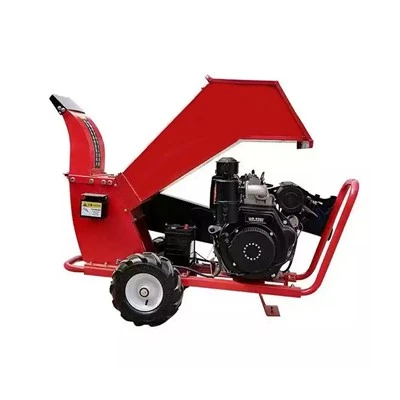
If you’re looking for a chaff cutter that’s built with real cutting stability in mind, feel free to reach out to discuss what model fits your needs. Whether you’re a first-time buyer or looking to replace a wobbly old one, I can help you find something that works for your budget and your setup.
Multifunction Chaff Cutter References
- Agricultural Machinery Design and Operation Manual, 2022, National Institute of Agricultural Engineering
- “Performance Evaluation of Small-Scale Chaff Cutters for Livestock Feed Preparation,” Journal of Agricultural Engineering, 2021
- Livestock Feed Equipment Guide, 2023, Small Farm Association
Zhengzhou Xinyihaotong Machinery Manufacturing Co., Ltd.
As one of the most professional chaff cutter manufacturers in China, we also support custom service. We warmly welcome you to buy high quality chaff cutter for sale here from our factory. For price consultation, contact us.
Address: Rooms 2301–2312, Jiayi Building, Xinxiang City, Henan Province, China
E-mail: zhaoyixuan5566@gmail.com
WebSite: https://www.xyhtmachinery.com/
