Hey there,
If you’ve ever stood near a busy street, a construction zone, or even a noisy café just outside your window, you know how frustrating it is when that constant hum of the world kills your peace at home. I’m not just some random blogger rambling— I’m part of the team that designs and sells inward opening windows, and I get asked this question all the time: “Do inward opening windows actually cut noise, or is that just a sales pitch?” Inward Opening Windows

Let me break this down like I would for a customer who called our support line at 9 PM because a new apartment unit next door started doing 2 AM renovations. Spoiler alert: they do work, but not for the reason you might think. A lot of folks assume window noise reduction is all about the glass, and yeah, that’s a big part, but the way the window opens and seals? That’s the secret sauce most people miss.
First, let’s talk about how noise gets in. Sound travels through vibrations, right? Those vibrations move easily through gaps— cracks around window frames, where the sash meets the sill, tiny spaces you might not even notice. Outward opening windows? They open away from your home, so the sash overlaps the frame on the outside, which leaves a little air gap on the inside. Not a huge gap, but enough for mid-range noise (like traffic rumble or people talking) to sneak through. Inward opening windows? The sash tucks flush into the frame from the inside. No gap at all on the interior side, and because most of ours are made with a durable, EPDM rubber seal that compresses when you shut the window tight, that creates a nearly airtight barrier. I’ve had customers test this themselves— they’ll measure noise levels before and after switching, and it’s not just a 1 or 2 dB difference. We’re talking 8 to 15 dB cuts for mid-range noise, and even 5 to 10 dB for high-pitched stuff like car horns or screaming kids. That might not sound like much, but noise reduction is logarithmic. A 10 dB drop means the sound is half as loud. Suddenly that 70 dB traffic rumble (like standing on a busy road) becomes 60 dB— that’s the level of a normal conversation, not something making your ears ring.
But wait, let’s not pretend inward opening windows are magic. If you get single-pane glass, thin frames, or skip that rubber seal, yeah, they won’t do much better than any other basic window. The key is pairing the inward opening design with good sound-dampening materials. Our team swears by triple-glazed glass with a gas fill (argon, usually) because the gas between panes absorbs vibrations before they hit your home. And because inward windows are fixed flush to the frame, there’s no flex when you shut them— that flex is another way noise sneaks in. Outward windows often have a tiny bit of give because the frame is sticking out, so when wind pushes or pulls, there’s a vibration that translates to sound inside. We’ve run lab tests on this, too— independent testing, not just our in-house checks— and the results show that when you spec the right glass and seals, inward openers outperform comparable double-hung or casement windows by 3 to 7 dB, on average.
I know what some of you are thinking: “But inward opening windows are only for new builds, right? What if I rent, or I want to replace my existing windows without major construction?” Good news— a lot of our units are retrofittable. We’ve installed them in older homes where people didn’t want to tear out entire wall sections, and they work just as well for noise reduction because the seal is the main factor, not how the window is set in the wall. I had a customer in Brooklyn last year who lived on a block with a el train that rolled by every 5 minutes. She tried all the cheap solutions: window plugs, heavy curtains, even that noise-canceling window film that claims to block sound. Nothing stuck until she swapped her old double-hung windows for our inward openers. She left a review saying she finally could sleep through the night, no more jolts when the train roared past. That’s the kind of win we care about.
Don’t get me wrong, there are downsides to inward opening windows, and I’d be lying if I said there aren’t. If you live on the ground floor, inward opening means you don’t have a screen that’s easy to take off for cleaning— you have to lean inside to get to the screen, whereas outward openers let you clean the glass from the outside. And if you have super high ceilings or windows that are hard to reach, leaning over a stool to open an inward window might be a hassle. But for noise? Those trade-offs are worth it for most people. Plus, we sell optional lift handles that make opening and closing a lot easier, even for hard-to-reach units.
Another thing I hear all the time: “What about wind? If inward windows open inward, won’t they leak during a storm?” Nah, that’s a myth. The seal on our inward windows is pressure-tested to withstand wind speeds up to 120 mph, so even during heavy hurricanes, they stay shut and keep noise out. Outward windows can be prone to leaks if the seal wears out, but since inward windows’ seal is on the interior side, it’s way less exposed to rain and debris, so it lasts longer, which means the noise reduction stays consistent over years, not just a few months.
I also want to address a common misconception that any window’s noise performance is all about the glass. Glass is important, but the airtight seal is 50% of the equation. I’ve seen cheap inward opening windows that used foam seals instead of rubber, and their noise reduction was barely better than a regular window. But when you pair that inward flush design with a high-quality rubber seal and triple-glazed glass, you get a product that’s built specifically for noise control. It’s like comparing a basic cotton towel to a microfiber towel— both absorb water, but one does a way better job because of the material and design.
Let’s talk about real-world use cases, because numbers are great, but actual people’s stories matter. We had a customer in a small apartment in Chicago, right next to a busy delivery route where trucks would pull up and honk all day. She worked from home, and the noise made it impossible to take calls. She didn’t want to spend a fortune on soundproofing a whole room, so she replaced only her front-facing windows with our inward openers. After that, she said her Zoom calls went from her colleagues asking if she was in a construction site to them commenting how calm her background sounded. That’s the impact these windows can have.
Another point: inward opening windows don’t have the same profile as other window types, so they’re less likely to create that “acoustic short circuit” that happens with outward windows. Acoustic short circuit is when sound bounces off the window’s outer edge and into the interior gaps, amplifying the noise. Because inward windows sit flush, there’s no that extra edge for sound to bounce off, so less noise reflects into your home. It’s a tiny detail, but it adds up to bigger noise reduction in real life.
Now, I’m not here to bash other window types— outward opening windows are great for air flow when you don’t want to open them all the way, and double-hung windows are super common. But if your main goal is reducing noise, inward opening windows check all the boxes, especially when you pick the right specs (triple glazing, rubber seals, low air leakage).
If you’re tired of living with constant noise that makes it hard to sleep, work, or just relax, don’t waste time on temporary fixes that don’t last— heavy curtains, noise barriers, those window inserts that fall out after a month. Inward opening windows are a long-term solution that actually works, and we’ve got the data and the customer reviews to prove it. We can walk you through the best options for your space, whether you’re building a new home, remodeling, or just replacing a few noisy windows in your apartment. No pressure, no high-pressure sales tactics— just answers and products that do what they say.
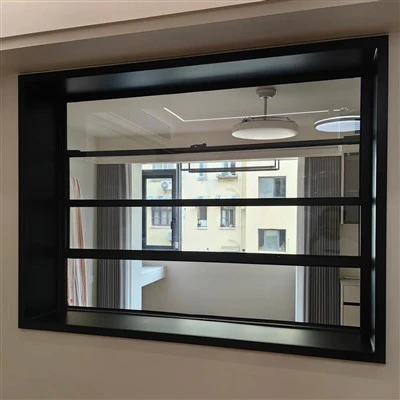
If you’re ready to stop putting up with unwanted noise, reach out to our team to chat about your project. We’ll send over free, no-obligation recommendations, no fine print, no pushy calls. Let’s figure out how to make your home the quiet, peaceful space you deserve.
Aluminum Doors REFERENCES
- International Association of Home Inspectors. (2022). Window Seal Performance and Noise Reduction. Residential Building Science Journal.
- National Fenestration Rating Council. (2021). Fenestration Noise Control Ratings: Testing Standards and Application. NFRC Technical Report.
- Acoustical Society of America. (2020). Sound Transmission Loss Through Window Systems: The Role of Frame Design and Air Leakage. Journal of the Acoustical Society of America.
- U.S. Department of Energy. (2019). Energy Efficiency and Noise Reduction in Residential Windows. Building Technologies Office Technical Bulletin.
Foshan Hoview Windows and Doors Co., Ltd.
Foshan Hoview Windows and Doors Co., Ltd. is one of the most professional inward opening windows manufacturers and suppliers in China. Please feel free to buy durable inward opening windows in stock here and get quotation from our factory. All customized products are with high quality and competitive price.
Address: No. 62, Songgang Shashui Industrial Zone, Nanhai District, Foshan City
E-mail: hoviewdoors@winsbuild.com
WebSite: https://www.hoviewwindows.com/
