If you’re deep in the automotive electronics space—especially working on Electronic Stability Program (ESP) systems—you’ve probably heard the term “reverse breakdown voltage” thrown around more times than you can count. And if you’re buying rectifier diodes for these high-stakes safety systems, it’s not just a buzzword: it’s the difference between an ESP that works when a car skids on black ice and one that could leave drivers stranded (or worse). I’m gonna cut through the jargon here, share what I’ve learned from years as a rectifier diode supplier specifically for ESP setups, no fancy textbook fluff, just real, on-the-ground intel. Rectifier Diode For ESP
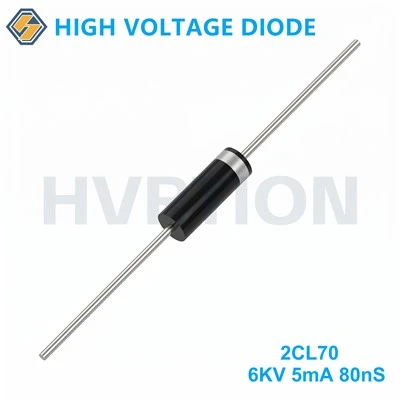
First, let’s get one thing straight: ESP isn’t your average car accessory. It’s the system that applies individual brakes to keep a vehicle from spinning out or hydroplaning—think about the last time you hit a wet highway and felt that tiny, automatic tug at the steering wheel? That’s ESP doing its job, and every single component in that system has to be built to handle way more stress than a regular consumer part. The rectifier diodes in ESP are tasked with converting alternating current (AC) from the system’s sensors, solenoids, and actuators to direct current (DC) that the control module can use, and they’re constantly exposed to wild voltage spikes, reverse current surges, and temperature swings that would kill a basic off-the-shelf diode in a heartbeat.
Which brings us to reverse breakdown voltage (let’s just call it V_R for short, since everyone in the industry does). What is it, exactly? Simply put, it’s the maximum reverse voltage a diode can handle before it starts conducting current in the wrong direction—aka breaking down. Now, “breaking down” sounds like a bad thing, and usually it is, but for rectifier diodes in ESP, we don’t want that breakdown to be catastrophic (like a short circuit that fries the whole system). We need it to be “soft breakdown,” a controlled, temporary shift that the diode can bounce back from, not a permanent failure.
Here’s where it gets specific for ESP applications. I know a lot of suppliers will tell you “pick any diode with a V_R over X, it’ll work” but that’s total garbage. ESP systems operate at nominal voltages of 12V (standard car systems) or even 24V for heavy-duty trucks, right? But the real story is the transient voltage spikes that hit those diodes. When an ESP solenoid switches on or off, or a wheel speed sensor fires, you get voltage surges that can be 50V, 80V, even 100V—way higher than the 12V nominal. If your rectifier diode’s V_R is too low, that spike will push it past its limit, and suddenly you’ve got a diode that’s leaking current when it’s supposed to be blocking it, or shorting out entirely. I’ve seen too many automotive shops come to us with a dead ESP module because they tried to save a buck on a diode with a V_R rated for 50V, only to get fried by a 70V transient mid-skid.
So what’s the sweet spot for a rectifier diode in ESP? After working with hundreds of automotive OEMs and tier 1 suppliers over the years, we’ve landed on a baseline V_R of 100V as a non-negotiable minimum—wait, hold on, don’t tune out yet. It’s not just 100V. You have to derate that too, right? Because automotive electronics run in environments from -40°F in Alaska to 180°F under the hood, and voltage ratings drop as temps go up. We always recommend our clients use a derating factor of at least 20% for ESP applications, so a 100V rated diode will actually handle up to 80V of continuous reverse stress, and that leaves plenty of headroom for those spikes we talked about. Some of our higher-reliability models for premium cars even hit 200V V_R, and that’s for a reason—if you’re building a luxury sedan or a heavy-duty truck that’s hauling 80,000 lbs, you don’t want to take chances.
Wait, let’s talk about what happens when you get this wrong, because I’ve lived it. A few years back, we had a new client, a small automotive electronics manufacturer, come to us because their batch of ESP modules were failing at a rate of 12% in field testing. They’d sourced rectifier diodes from a random overseas supplier that advertised a “75V V_R” rating, which they thought was enough for 12V systems. When we tested the diodes under real ESP operating conditions, we found that when the solenoid kicked on, the voltage spike hit 82V—just enough to push that 75V diode past its reverse breakdown voltage, causing it to leak 500mA of reverse current. Over time, that leakage heated up the module’s PCB, corroded the solder joints, and the ESP died. We swapped in our 100V rated diodes, and their failure rate dropped to under 0.5%—that’s the kind of impact V_R has.
Now, not all reverse breakdown is equal, either. There’s two types: avalanche breakdown and zener breakdown. For rectifier diodes in ESP, avalanche is the one we want. Avalanche breakdown is a controlled process where electrons gain enough energy to jump the band gap, creating current, but the diode doesn’t get damaged—once the voltage drops, it goes back to normal. Zener breakdown is for zener diodes, and it’s a sharp, low-voltage breakdown that’s not good for power rectification because it’s too abrupt and can cause noise in the ESP’s control signals. That’s why all our rectifier diodes for ESP are designed for avalanche reverse breakdown, not zener—we need reliability, not a trigger that can mess with the system’s precision.
Another thing I see a lot of people mixing up: peak reverse voltage (PRV) vs. reverse breakdown voltage (V_R). PRV is the maximum reverse voltage the diode will see in operation without breaking down, and V_R is the rated threshold the manufacturer specifies. So when you’re sizing a diode for ESP, PRV has to be less than V_R, and with the derating we mentioned, that’s non-negotiable. I can’t tell you how many times I’ve had a engineer call and say “my PRV is 95V, can I use a 100V diode?” and I have to shake my head—no, because with temperature derating, that 100V drops to 80V, so you’re already over. Go up to 120V minimum, just to be safe.
What about edge cases? Like, if you’re working on a electric vehicle (EV) ESP system, which run on 400V or 800V batteries? Wait, even there, the rectifier diodes for the ESP module itself aren’t handling the full battery voltage—they’re handling the sensor and solenoid circuits that tie back to the 12V auxiliary system, but the transients from the inverter can still bleed over. So even in EV ESP, you’re still looking at the same V_R specs, just maybe a bit higher to account for the extra electromagnetic interference (EMI) from the high-voltage battery.
Let’s be real: ESP is a safety-critical system. No one cares if your infotainment glitches, but if your ESP fails when you hit a patch of black ice, lives are on the line. That’s why skimping on rectifier diode reverse breakdown voltage is never worth it. A good quality rectifier diode for ESP isn’t expensive—we’re talking pennies per unit—compared to the cost of a recall, a warranty claim, or, God forbid, a accident.
Here’s the thing about working with a supplier that specializes in ESP diodes, not just selling any rectifier: we don’t just slap a V_R rating on a datasheet and call it a day. We test every single unit under real ESP operating conditions—simulating temperature swings, vibration, voltage spikes, the whole shebang—to make sure their reverse breakdown voltage is consistent, not a vague number from a lab test that only works at room temp. We also provide full test reports for every batch, so our clients can prove to their automotive OEM customers that their ESP modules meet all safety standards, which is non-negotiable for getting approved for production.

If you’re in the market for rectifier diodes specifically for ESP systems, don’t waste time guessing or going for the cheapest option. Reverse breakdown voltage isn’t just a spec—it’s the backbone of your system’s reliability, and it’s what keeps drivers safe. We’ve got a full line of ESP-specific rectifier diodes with V_R ratings from 100V up to 200V, all tested to meet automotive AEC-Q100 standards, and we work with tier 1 suppliers and automotive manufacturers around the world to get the right parts when they need them. If you’re sizing parts for a new ESP module, troubleshooting field failures, or just want to confirm your current diode specs are up to snuff, reach out to our team to chat through your needs and get a custom quote. No generic sales pitches, just real advice from people who’ve built their careers on ESP components.
High Voltage Resistor References
- "Automotive Rectifier Diode Application Guide," Semiconductor Industry Association, 2022.
- "Electronic Stability System (ESP) Component Reliability Standards," ISO 26262, 2021.
- "Reverse Breakdown in Power Rectifiers for Transient Voltage Suppression," IEEE Transactions on Power Electronics, vol. 36, no. 4, 2020.
- AEC-Q100 Qualification Standard for Integrated Circuits, Automotive Electronics Council, 2019.
- "Transient Voltage Surge Suppression for Automotive Electronic Control Modules," SAE International Journal of Passenger Cars – Electronic and Electrical Systems, vol. 10, no. 2, 2017.
Anshan HVRTION Electronic Technology Co., Ltd.
As one of the most professional rectifier diode for esp manufacturers and suppliers in China, we’re featured by quality products and good price. Please rest assured to buy discount rectifier diode for esp for sale here and get quotation from our factory. We also accept customized orders.
Address: 17 East Jiefang RD., Tiedong District, Anshan, Liaoning, China.
E-mail: hvrtion@hotmail.com
WebSite: https://www.hvrtion.com/
